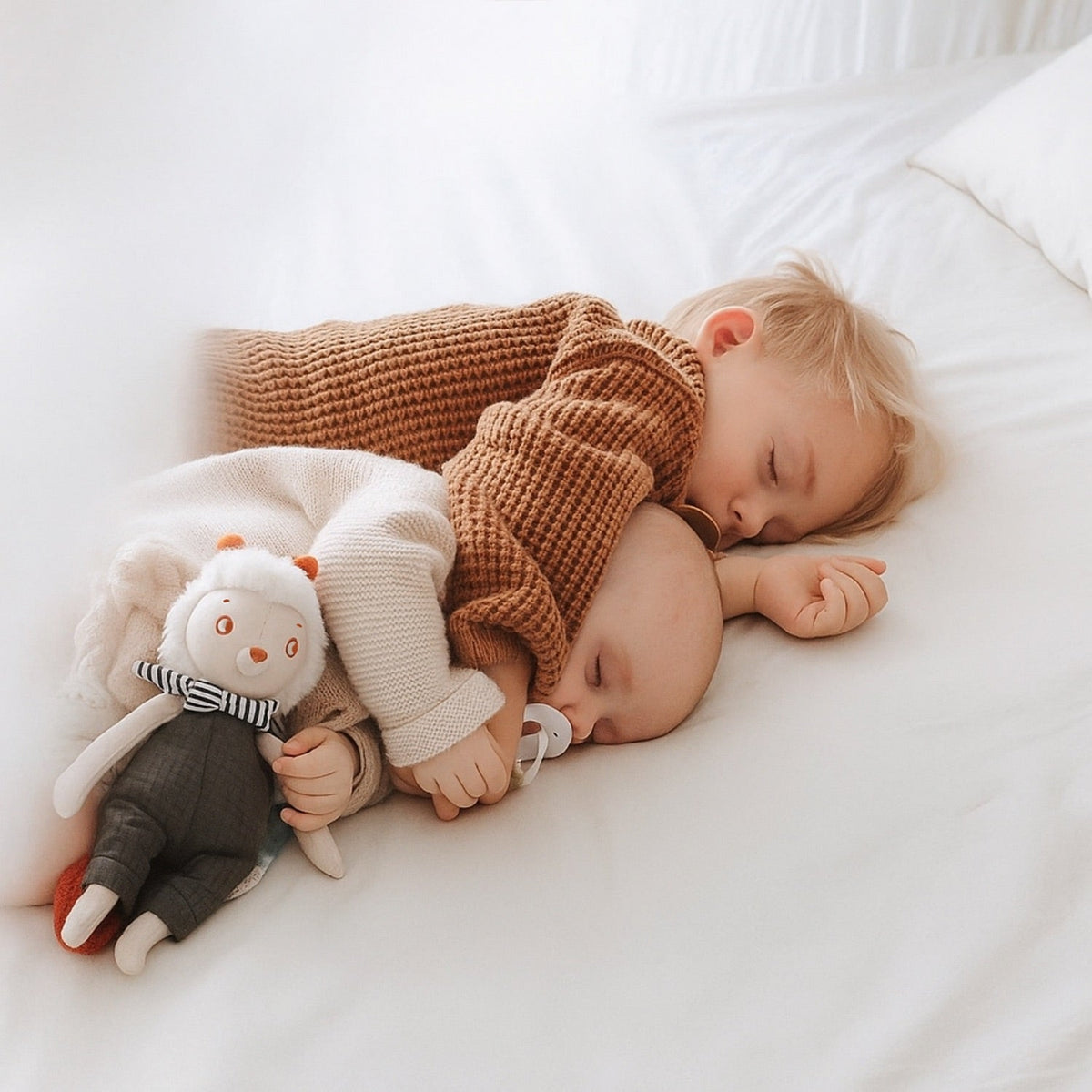


A plush toy often enters a child's life long before it becomes a toy. It goes into the crib, ends up near the face, is bitten, rubbed on the skin, dragged everywhere. For this reason, understanding how to choose safe plush toys is not just a product specification detail, but a choice that concerns materials, construction, and real, day-to-day use.

How to choose safe plush toys without stopping at appearances
A beautiful plush toy is not always a suitable one. Delicate colors, cute faces, and soft fabrics might immediately suggest a good purchase, but safety hinges on less visible elements: well-closed seams, stable stuffing, absent or securely attached accessories, and consistent age recommendations.
For newborns and young children, the starting point is simple: the fewer superfluous details there are, the better. Ribbons, decorative buttons, beads, rigid applied eyes, and small ornaments increase the risk of detachment. A plush toy designed for the first few months should have a clean, soft design that is also easy to understand from a safety perspective.
The context of use also matters here. A gift for a child's room can be different from a sleep companion. If the plush toy will mostly sit on a shelf, more elaborate shapes can be considered. However, if it will accompany the child to bed, in the stroller, or to daycare, absolute priority should be given to washability, durability, and simple construction.

Materials: what to really look for
The outer fabric is the first thing that touches the skin, but it's not the only thing to consider. The stuffing also matters, because a plush toy is squashed, bent, and often put in the mouth. The materials should be soft but stable, free of strong odors, and have a uniform tactile sensation. A strong chemical smell, for example, is always a signal to take seriously.
Natural fibers attract many parents, and understandably so. Cotton and linen can be excellent choices, especially if well-made and easy to wash. That said, "natural" doesn't always automatically mean better in every situation. Some good quality synthetic fabrics can offer superior wash durability and consistent softness over time. The difference lies in the quality of the finished product, not the trendy word on the label.
For very young children, it is advisable to look for plush toys with clearly stated materials. When the composition is vague or not very transparent, it is more difficult to truly evaluate the product. A serious brand specifies the fabric, filling, care instructions, and recommended age without leaving any gray areas.
The importance of certifications
Certifications do not replace common sense, but they help. They indicate that the product has been tested or manufactured according to certain standards. For a plush toy intended for newborns and infants from the first few months, it is useful to check compliance with European toy regulations and ensure that the information is legibly present.
Here too, balance is needed. A certification is a good starting point, not an absolute pass. If the plush toy has minute details, tight seams, or unconvincing rigid parts, the fact that it is certified is not enough to make it the best choice for intensive daily use.

Recommended age: not a decorative indication
Many wrong purchases originate here. A plush toy might seem harmless to an adult but not be so for a newborn. The difference between 0+, 12 months, or 3 years is not formal: it concerns size, components, length of cords or ribbons, density of stuffing, and durability of details.
If the child is less than a year old, it is better to opt for small or medium-sized plush toys that are soft, light, and without attached elements. Overly bulky shapes can be uncomfortable to handle, while overly complex ones become more difficult to wash and check. In the first few months, doudous and essential textile companions, designed for close contact, work particularly well.
For older children, you can dare something more aesthetically, but without forgetting that real play puts any construction to the test. A plush toy for a three or four-year-old must withstand energetic hugs, falls, dragging, and frequent washes. Safety, at that age, goes hand in hand with durability.

Seams, eyes, accessories: the details that make the difference
If there's one area to check carefully, this is it. Seams must be regular, well-closed, and without loose threads. By gently pulling arms, ears, and paws, the plush toy should not deform or reveal its stuffing. If it happens when new, daily wear will only worsen the situation.
Embroidered eyes are generally preferable to rigid applied ones, especially in products for young children. The same applies to the nose, mouth, and other facial details. Embroidery reduces the risk of detachment and makes the plush toy easier to maintain over time.
Also, pay attention to long ribbons, removable hats, decorative buttons, and clothes with tiny pieces. These are adorable elements, often very theatrical, but not always compatible with free and daily use by a young child. In a boutique context, design matters, but good children's design also knows how to forgo the superfluous when necessary.

How to choose safe plush toys for sleeping and playing
Not all plush toys have to do everything. Some are perfect as comfort objects, others as symbolic play, and still others as a keepsake gift. Separating these functions helps to buy better.
For sleep, very soft, light, and easy-to-wash models are needed, without hard parts and with a simple shape. For daily play, it's useful to choose plush toys with a slightly more solid structure, provided they remain safe for the child's age. For an important gift, perhaps intended to last for years, more space can be given to aesthetics and brand character, but always checking the basics: clear label, careful finishes, convincing materials.
This approach is particularly useful when buying for someone else. A birth gift, for example, should be more cautious than a gift for a five-year-old who already plays independently. If you don't know the family's habits well, it's better to choose an essential plush toy suitable for younger children.

Washability is not an extra
A truly safe plush toy must be easy to clean. Not because it has to remain perfect for display, but because it will most likely end up on the floor, in the park, in the car, at the table. If it doesn't wash well, it quickly conflicts with real use.
Before purchasing, it is worth checking whether the manufacturer indicates hand or machine washing, recommended temperatures, and drying times. A very delicate plush toy that is unmanageable in daily care risks being used less or, worse, used too much without adequate maintenance.
Here, too, there's a compromise. More elaborate models, with special fabrics or tailored details, may require more attention. They are beautiful to give and to keep, but they are not always the best to accompany a young child's everyday life.

When the brand really matters
In the world of children's products, a brand name shouldn't just be about style, but about reducing uncertainty. A brand with a clear history, consistent production, and complete information tends to offer more guarantees than a generic product of unclear origin.
For many parents and those buying a gift, this approach is already part of the answer to how to choose well. It doesn't eliminate the need to check every single product, but it avoids starting from a confused and unfiltered assortment.
0 comments