

A small child picks up a wooden cube and turns it, taps it, brings it to his mouth, then drops it. He's not "playing poorly" just because there are no lights or sounds: he's doing research. This is why wooden toys, when well-chosen, work so well over time: they encourage repetition of simple gestures, improvement of a movement, concentration, and understanding cause and effect.
When it comes to Montessori wooden toys , many families look for three things: natural materials, durability, and a toy that doesn't "do everything itself." But Montessori isn't about buying a label: it's about choosing essential play tools, consistent with the child's abilities at that moment.
What Makes a Wooden Toy “Montessori”
Montessori-style play tends to be simple, concrete, and focused on one skill at a time. The piece doesn't distract with too many features, but rather invites the child to discover an action: threading, stacking, opening and closing, matching, pouring, fitting together. The wood, with its weight and resistance, provides clear feedback: if you push too hard, it falls; if you line it up correctly, it fits.
There's another often overlooked feature: attention to aesthetics. Subtle colors, recognizable shapes, and objects that fit well even in a basic bedroom. Not because "they have to be beautiful for adults," but because a tidy and visually calm environment also helps little ones concentrate.
How to choose: age by age
Age helps guide the decision, but the stage matters more: a very cautious 14-month-old might enjoy "simpler" games, while another of the same age will seek more complex challenges. The best practical guideline: the game should "call" to the child, but not systematically frustrate.
0-12 months: grip, sound, permanence
At this stage, wood must be chosen carefully: generous dimensions, rounded edges, and finishes suitable for little ones who explore with their mouths. Objects that train grip and hand-to-hand skills are perfect, such as wooden rattles, woven wood-and-fabric rings, and small, simple cause-and-effect games.
A classic that works: a box with an opening where you can insert a large object (not small parts), to practice the idea of "disappeared and found." If the child gets nervous, it's best to reduce the difficulty: just one element, just one hole.
12-24 months: puzzles, stacking, threading
Montessori wooden toys are at their best here: puzzles with large knobs, stacking towers with rings of different sizes, and threading games (on sturdy, well-spaced pegs). The goal isn't to "make the right shape," but to practice hand-eye coordination and movement control.
If you are choosing a gift, in this age group the games that last the longest are the modular ones: stackable ones that become constructions, interlocking pieces that can also be used as characters or "objects" in symbolic play.
2-3 years: fine motor skills and first autonomy
Children want to do things "on their own," and this shows in play. Tools that mimic real-life actions are therefore ideal: small locks, latches, gears, cogwheels, screwing and unscrewing games with large pieces. Even wooden puzzles become interesting if they have an adequate number of pieces: few but with recognizable images and clean lines.
At this stage, materials for hands-on activities also come into play: trays, small containers, and decanting objects with easy handles. There's no need to turn your home into a classroom, but occasionally offering a "real" activity in child-like form increases concentration and satisfaction.
3-6 years: construction, logic, pre-writing
From age three and up, many children enjoy sequences and rules: more complex geometric puzzles, balancing games, wooden constructions with model cards, progressive puzzles, tactile letters and numbers if presented as a game and not as a task.
Safety and quality: what to really check
With wood, the feeling of "natural = safe" comes naturally, but it's worth checking a few details. First, the finish: water-based paints or child-friendly oils, no strong odors, smooth surfaces, and well-rounded edges. Then, the sturdiness: pieces that don't splinter when knocked and that don't have easily detachable components.
For little ones, size and shape are just as important as the material. A beautiful toy, but with small parts, isn't necessarily suitable. Even strings and laces, if present, should be age-appropriate.
A helpful "shop" criterion: ask yourself if that toy would hold up if passed on to a sibling or given as a gift after two years. "Good" quality wood doesn't become perfect, but it ages well.
How to present them at home: fewer shelves, more attention
The success of a Montessori game often depends on how it's presented. If everything is in plain sight, the child can move from one object to another without stopping. It's better to have a few accessible games, each with its own space, and rotate them slightly: two weeks with certain materials, then a change.
When introducing a new game, try showing it once, silently, using slow movements. There's no need to explain too much.
When wood isn't enough (and rightly so)
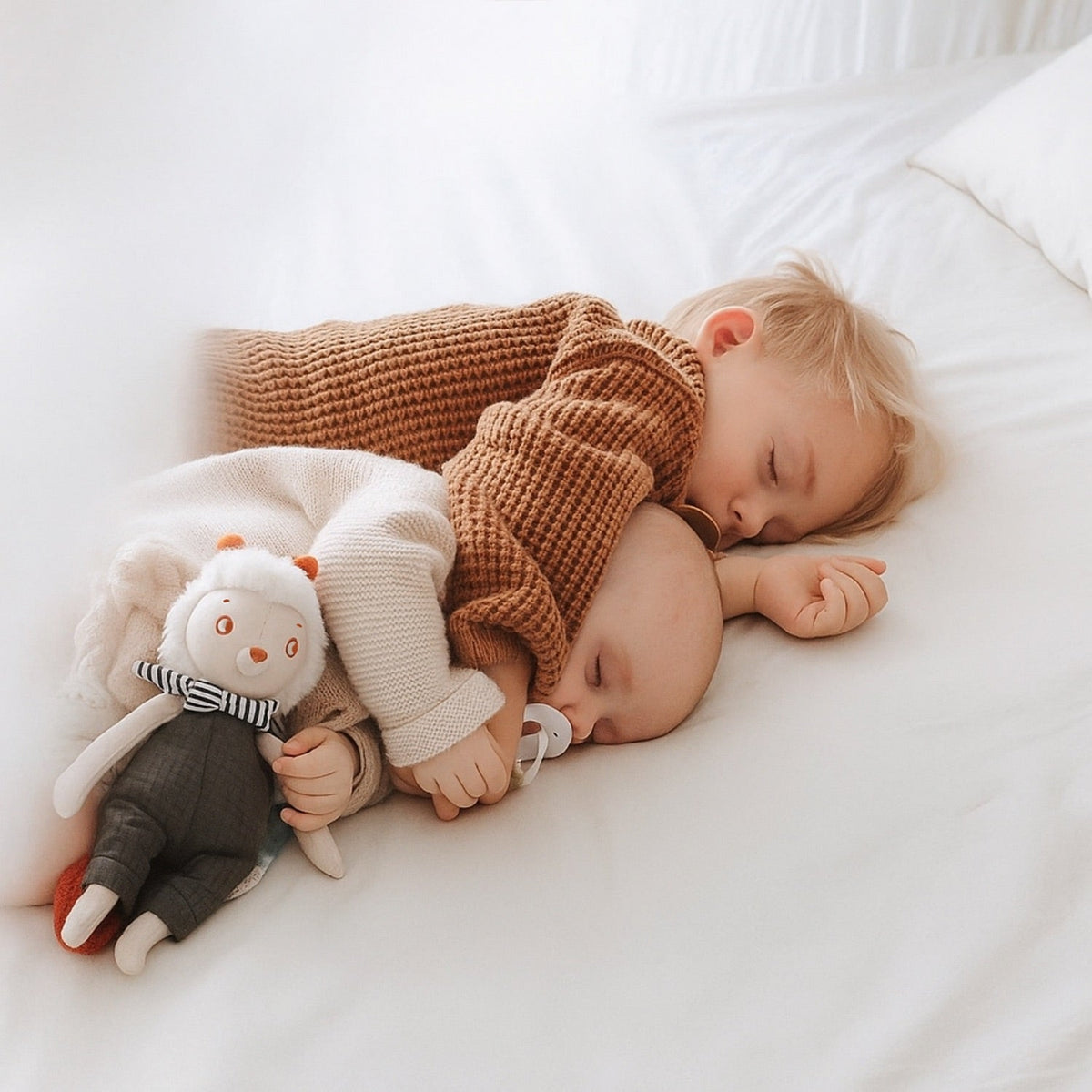
If you only look for wood, you risk missing out on important play opportunities. Some children also need softness ( dolls , stuffed animals , cuddly toys ) for emotional play; others prefer more "transformable" materials like plasticine or water, which wood cannot replace. Montessori, in everyday practice, doesn't mean "just a material," but "materials chosen with intention."
Wood often remains the backbone: it pairs well with natural fabrics, hardback books, and small nightlights that create a welcoming atmosphere. In a store curated by age and type of toy, it's also easy to create a coherent experience without overbuying. If you like this approach of selecting by stages and categories, you can explore a boutique selection at https://pipipupu.com and be guided by brands that excel in finishes, safety, and durability.
A simple criterion for deciding today
If you're faced with two wooden toys and they both seem "right," choose the one that leaves the child more room to experiment. The one that allows for multiple attempts, that doesn't "run out" after doing just one thing correctly, and that remains interesting even as the child's age changes. The beauty of well-made wooden toys, in the end,
A helpful thought for those who choose today: if a game seems "too easy," try asking yourself whether you're looking at the outcome or the process. In growth, the process almost always wins.
0 comments