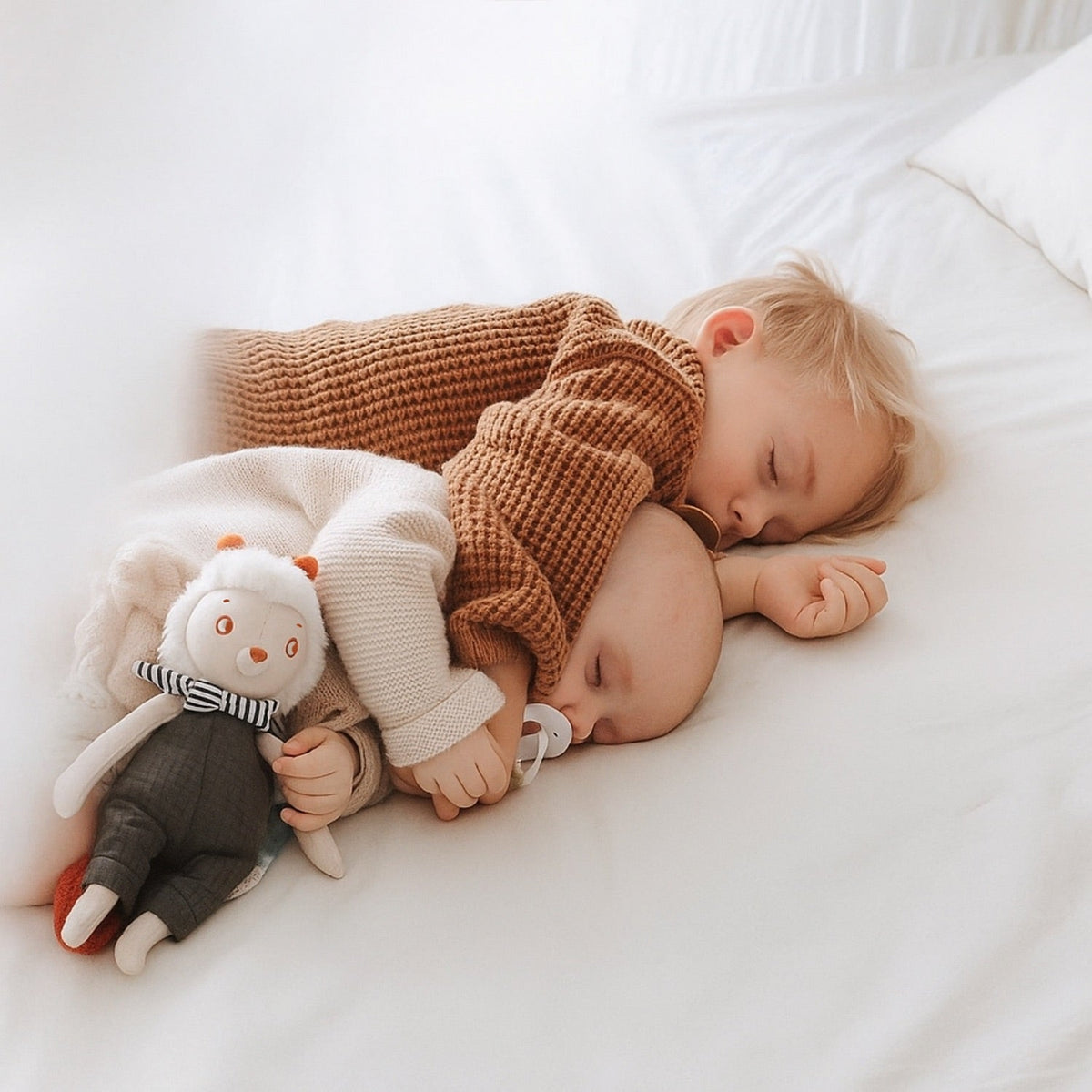


Some births have an endless list of "useful" gifts that all look the same: size 0 onesies, oversized stuffed animals, duplicates. And then there are those gifts that become a habit, a keepsake, an object that stays in the home and in the family history. Original birth gift ideas aren't strange or complicated: they're carefully chosen, made with the right materials, and actually used in the first few months.
What makes a birth gift truly original?
In the baby world, original rarely means "never seen before." Rather, it means: not random. An original gift respects the newborn's skin, adapts to the parents' rhythms, and doesn't become a burden after two weeks.
Safety matters (certifications, non-toxic paints, solid seams, no easily detachable parts), maintenance matters (washable, durable, designed for everyday use) and the timing matters: the needs of a 10-day-old newborn are different from those of a 4-month-old baby.
There's another detail that often makes the difference: aesthetic coherence. Parents today create a space: a nursery, a changing area, a nap area. A beautiful and "right" object for the home is used more, so it stays.
Original birth gift ideas: choose by occasion
If you want to reduce the risk of giving a gift that ends up at the bottom of a drawer, think about occasions: bedtime, bath time, changing, first outings, quiet playtime. It's a simple but surprisingly effective approach.
Bedtime: small rituals that reassure
In the first few months, sleep isn't just a phase; it's a family affair. The originality here lies in giving a gift that signals, "It's time to calm down." A soft comforter or blanket , suitable from day one, is a classic that never gets old—as long as it's lightweight, easy to wash, and made from reliable materials.
Even a discreet night light can be a smart gift: it doesn't dazzle, it doesn't disturb, and it helps with waking up for feedings and changing. The trade-off? Some families prefer total darkness, so it's worth choosing a dimmable or very soft light, more of a "presence" than an illumination.
And if you want something truly memorable without being cumbersome, think of an object that will last over time: a small mobile, a delicate textile decoration, or a reading corner element that today is for the parents and tomorrow becomes for the child.

Bathing and cuddling: the useful that seems like a gift
Bath time is one of the most tangible, yet most intimate, moments of baby's life. A set of quality terrycloth towels or bathrobe (soft, absorbent, and free of irritating finishes) is a gift that's used immediately and often. It's not "spectacular," but it becomes precious.
If you want to raise the bar without going overboard, a small selection of routine accessories—a soft toothbrush, fabric wipes, and an organizing pouch—can be surprising. This works especially well if the colors and materials are carefully chosen: it feels like a thoughtful set, not a piece of kit.
Gearbox: practical, but with taste
Changing is pure repetition. Precisely for this reason, anything that makes that moment more orderly and quicker is a gift that makes parents happy.
An original idea is to focus on organization: baskets and containers made of natural materials, toiletry bags for diapers and creams, and small organizers to keep everything within reach. The benefits are immediate. The only caveat: consider where it will be used. If your home is small, compact and versatile items are better.
First releases: when the gift is visible
First walks are a mix of excitement and logistics. Here, originality can be found in a well-designed accessory that parents actually use: a lightweight yet warm blanket , a multipurpose bag for storing changes and small items, a natural fabric hat.
For those who want to give a gift that's "wearable" without making a mistake, there's a prudent approach: don't go for a newborn size. It's better to choose a garment or shoe designed for a few months later, when the baby has a more stable rhythm and the gift can be handled with less anxiety. It's a classic "it depends": if you already know the weight and measurements, you can go for it; otherwise, it's better to leave some margin.
Calm play: first discoveries, without excesses
When it comes to birth, play isn't just entertainment. It's sensory stimulation, touch, and listening. A soft rattle , a small fabric toy, or a simple-shaped grasping object is more appropriate than noisy or overstimulating toys.
Wood, if chosen well, remains one of the most prized materials for its quality and durability. But even here there are trade-offs: wood is beautiful and durable, but it can be "colder" or less suitable for the first few days than textile. For a newborn gift, a thoughtful pairing often works well: something soft for the first few days and something wooden for the months to come.

Original birth gift ideas for those who want to "play it safe"
Original doesn't have to mean risky. If you're a family friend, an aunt, a godparent, or a colleague, you probably want to make a good impression without asking for too much personal information.
A safe choice is to choose gifts based on a specific age group, not a specific size or stage. An item used from birth to 6 months, or from 3 to 12 months, reduces the risk of mistakes. Toys with a broad age range or routine accessories also work better than highly specific items.
When you want to add a truly personal touch, you can choose a gift that tells a story through design: a soft doll with a delicate aesthetic, a carefully detailed plush toy, a small playset that doesn't look like "just any" plastic. Brands like Moulin Roty and Maileg are often chosen for precisely this: perceptible quality, recognizable style, objects that become part of the child's bedroom.
If you're looking for a curated assortment by age, use, and brand, with a selection geared toward safe materials and design, you can head to a specialized store like PIPI & PUPU and friends , where browsing by category helps you choose without having to be an "expert."
Budget matters, but not how you think.
When it comes to baby gifts, there tends to be two extremes: spending little (after all, it's a small baby) or spending a lot to impress. In reality, the best effect often comes from thoughtful spending.
A small to medium-sized but well-made item that lasts and gets used often is remembered more than a large gift that stays in the box. If you have a larger budget, you can consider a coherent set (sleep + comfort, bath + softness, outing + accessories) rather than a single "important" but ill-suited item.
How to Avoid Duplicate Gifts (Without Ruining the Surprise)
The most common risk is giving a gift of something they already have in two versions. To avoid this, there's no need to ask the parents like a check-in.
You can ask just one simple question: "Do you already have a favorite comforter or nightlight?" Or you can choose categories where duplicates aren't a problem: muslins, small containers, lightweight blankets. Another strategy is to focus on a truly distinctive design item: if it's thoughtful and beautiful, even if it's "similar," it'll be the one left out.
And if you want to maintain the wow factor, focus on quality and materials. No one gets offended by a second towel made of excellent terry cloth or a blanket that doesn't itch or make you sweat.
One last filter: does this gift simplify or add?
Before you buy, imagine the scene: a parent with one hand on the child and the other searching for something in the dark. Does your gift help or hinder? If it helps, it's almost certainly a successful idea.
By choosing beautiful, safe objects designed for everyday use, originality comes naturally: it's not the surprise effect of the moment, it's the satisfaction of finding it still there, months later, among the things that were truly part of the beginning.
0 comments